
When Chewing Hurts: Understanding TMJ Pain and When to Seek Help
Written By: Terry Kilpatrick, RDA
Supervised & Edited By: Levy Do, DDS
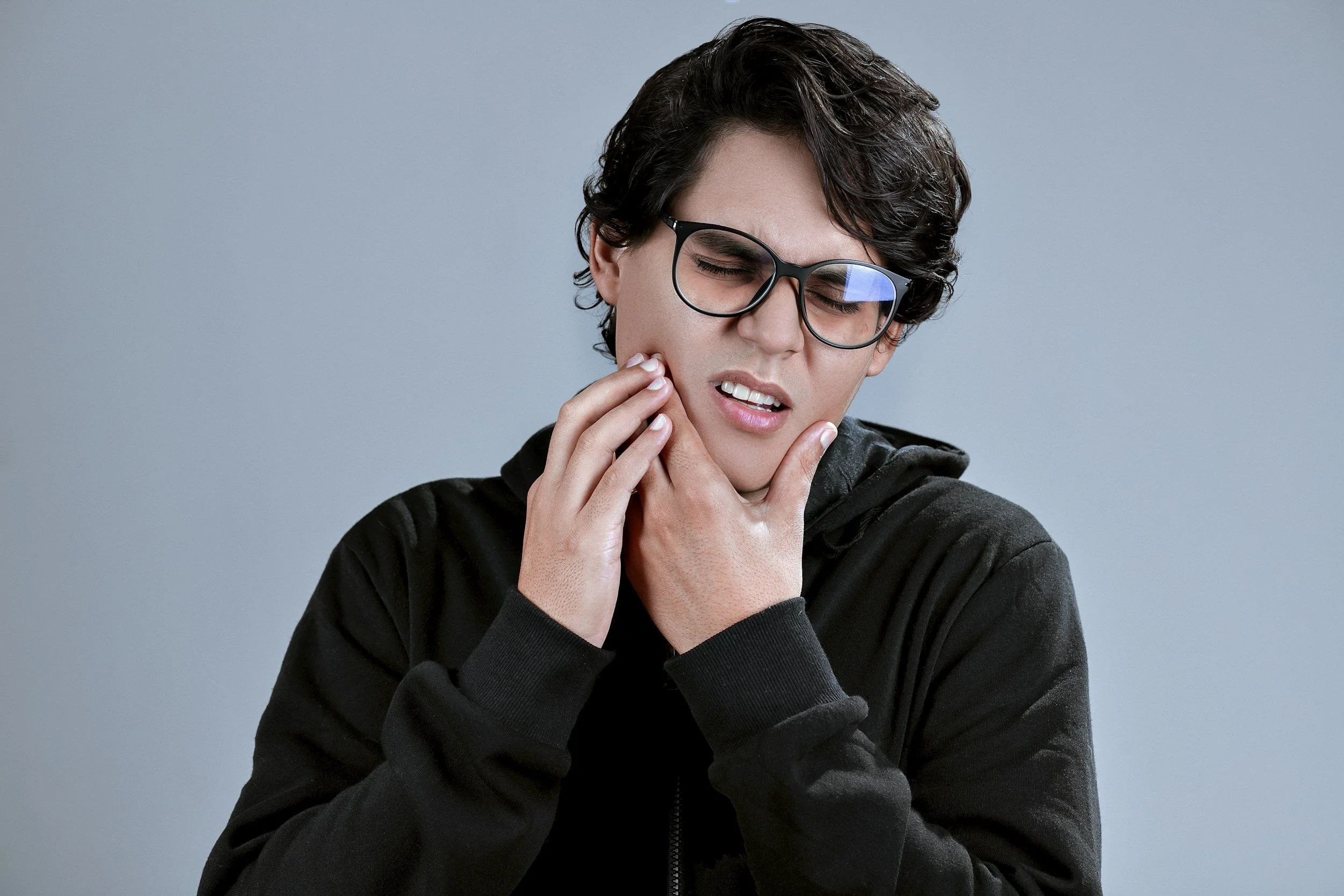
Jaw pain, clicking, stiffness, or frequent headaches while chewing can interrupt daily life—especially when gathering around the table to enjoy favorite meals. While an occasional, painless jaw click is common, ongoing discomfort or restricted jaw movement should be evaluated by a dentist. Below are answers to the most common questions about temporomandibular joint (TMJ) pain and how Pine Cove Dentall in Mansfield, Texas approaches conservative care.
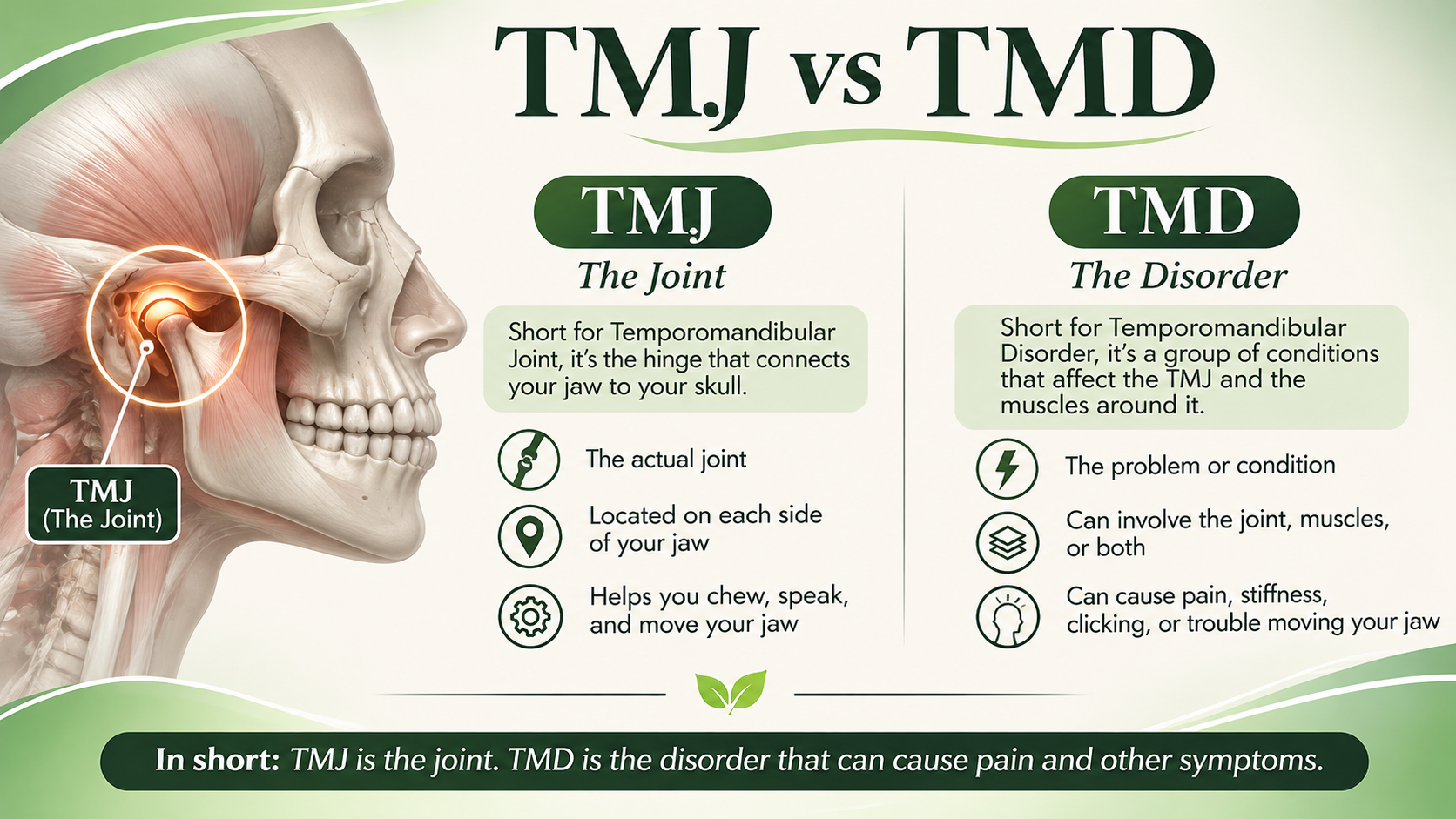
What is the difference between TMJ and TMD?
TMJ refers to the jaw joint itself, while TMD stands for temporomandibular disorder—the conditions that cause pain or dysfunction in the joint and chewing muscles.
You have two temporomandibular joints, located on each side of your head just in front of your ears. They work with surrounding muscles and tissues so your jaw can open, close, and move side-to-side when you speak, chew, swallow, or yawn. Although many people say they "have TMJ" when their jaw hurts, TMD is the clinical term for the underlying issue.
What causes TMJ pain and jaw discomfort?
TMJ discomfort is commonly caused by teeth grinding (bruxism), jaw clenching, muscle strain, joint injury, or arthritis.
In many cases, symptoms develop from a combination of stress-related clenching and overuse of the chewing muscles. Sometimes, however, there is no single obvious trigger.
Is jaw clicking or popping always a sign of a TMJ disorder?
No, painless jaw clicking or popping is common and does not always require treatment.
A clicking sound becomes a clinical concern when it is accompanied by pain, jaw stiffness, locking, or difficulty opening and closing your mouth smoothly.
What are the most common signs and symptoms of TMD?
Common signs of a temporomandibular disorder include jaw joint tenderness, pain while chewing, morning jaw stiffness, and frequent headaches.
Because TMJ issues affect every patient differently, symptoms may come and go or gradually worsen over time. Signs worth discussing with your dentist include:
Pain or tenderness in the jaw joint or chewing muscles
Soreness around the ears, cheeks, face, or neck
Discomfort when biting or chewing food
Jaw stiffness, especially right after waking up
Difficulty opening your mouth all the way
A jaw that briefly catches, locks, or feels stuck
Painful clicking, popping, or grinding sounds
Frequent headaches or facial muscle tension
A noticeable change in how your upper and lower teeth fit together
Symptoms that flare up during stressful periods
Morning jaw fatigue or worn teeth from nighttime clenching or grinding
(Note: Facial and jaw pain can stem from several dental or medical causes, which is why a professional evaluation is essential rather than self-diagnosing.)
How does a dentist evaluate TMJ pain?
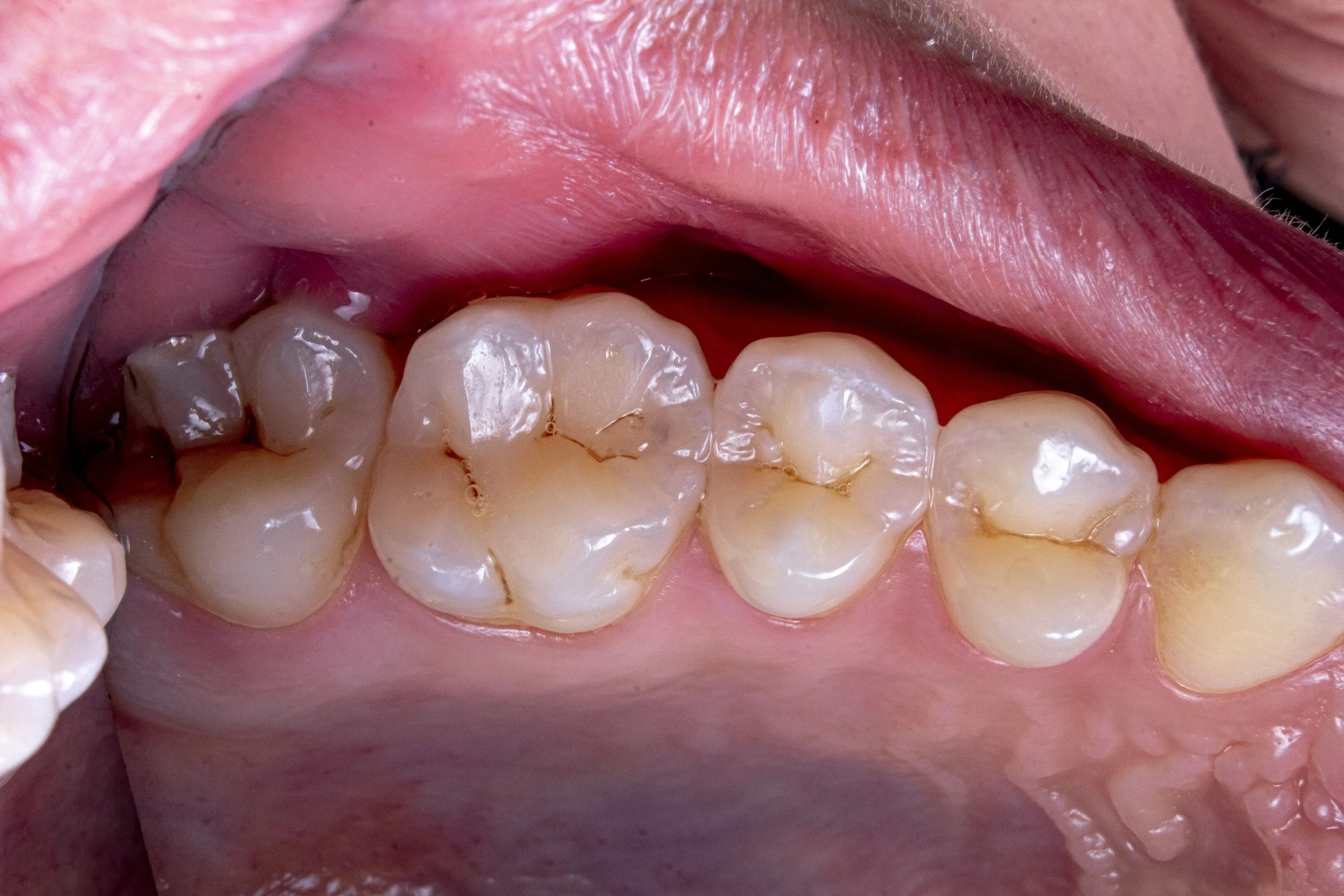
A TMJ evaluation involves reviewing your symptom history, checking your jaw’s range of motion, examining your bite, and looking for signs of teeth grinding.
At Pine Cove Dental, your evaluation starts with listening to when your discomfort began, where it radiates, and what makes it better or worse. During your exam, Dr. Levy Do and our team will:
Gently palpate the jaw joints and surrounding muscles for tenderness
Listen for clicking, popping, or grinding during jaw movement
Observe how smoothly your jaw opens and closes
Measure your jaw’s range of motion
Check tooth enamel for signs of clenching or grinding wear
Evaluate your bite alignment
Recommend digital dental imaging when appropriate
What are the best conservative treatments for TMJ pain?
Most routine TMJ pain is managed first with conservative, reversible therapies—such as soft foods, heat or cold packs, habit awareness, and custom nightguards—rather than permanent dental procedures.
Because TMD has different triggers for every patient, treatment is personalized rather than one-size-fits-all. Depending on the root cause, conservative care may include:
Temporarily eating softer foods to rest overworked chewing muscles
Applying warm compresses or cold packs to relieve soreness
Avoiding gum chewing and practicing daytime jaw relaxation
Guided jaw stretches or physical therapy
Wearing a custom-fitted oral appliance or nightguard to cushion teeth and reduce strain from nighttime clenching
Using over-the-counter or prescribed medications as directed by a qualified healthcare provider
Treatments that permanently alter your teeth, bite, or jaw joint are generally not recommended as a first step for routine TMJ discomfort.
Sources and Clinical References
Learn more about temporomandibular disorders through these trusted health and dental organizations:
National Institute of Dental and Craniofacial Research: TMD
https://www.nidcr.nih.gov/health-info/tmdNational Institute of Dental and Craniofacial Research: Less Is Often Best in Treating TMD
https://www.nidcr.nih.gov/sites/default/files/2024-10/tmd-less-is-often-best.pdfJournal of the American Dental Association: Why Does My Jaw Hurt?
https://jada.ada.org/article/S0002-8177(19)30575-6/pdf
Where can I get evaluated for TMJ pain in Mansfield, TX?
If jaw pain, stiffness, locking, or painful clicking is interrupting your day, Pine Cove Dental in Mansfield, Texas provides thorough, conservative TMJ evaluations.
Located at 1560 E. Debbie Ln #108, Mansfield, TX 76063, Dr. Levy Do and our team take the time to listen to your symptoms, assess how your jaw and bite are functioning, and clearly explain your options without rushing into unnecessary treatment.
To schedule an evaluation, call our Mansfield office at (817) 453-8520 or request an appointment online.